
San Francisco Arrest News Sources
SFPD News comes first. The department posts frequent but selective notices about arrests, investigations, safety events, and appeals for tips. A post might carry evidence photos, a scene shot, surveillance stills, a suspect image, or just a placeholder. Treat it as a curated stream, not a daily arrest log. The department does not routinely publish jail booking photographs. The Sheriff's Office offers no named recent-bookings page. Its homepage lists only date-stamped totals for bookings and releases. The District Attorney adds another layer. That office posts selective charging and case-outcome releases, which sit later in the process than booking. SFPD describes the arrest. The Sheriff holds anyone accepted into county custody. Prosecutors decide what to file. The Superior Court records what follows. Each source fills a different role. Hang onto any incident, booking, or court number you find. The same name can belong to more than one person. The official SFPD release interface makes clear why agency news reads as a selected stream rather than a roster.
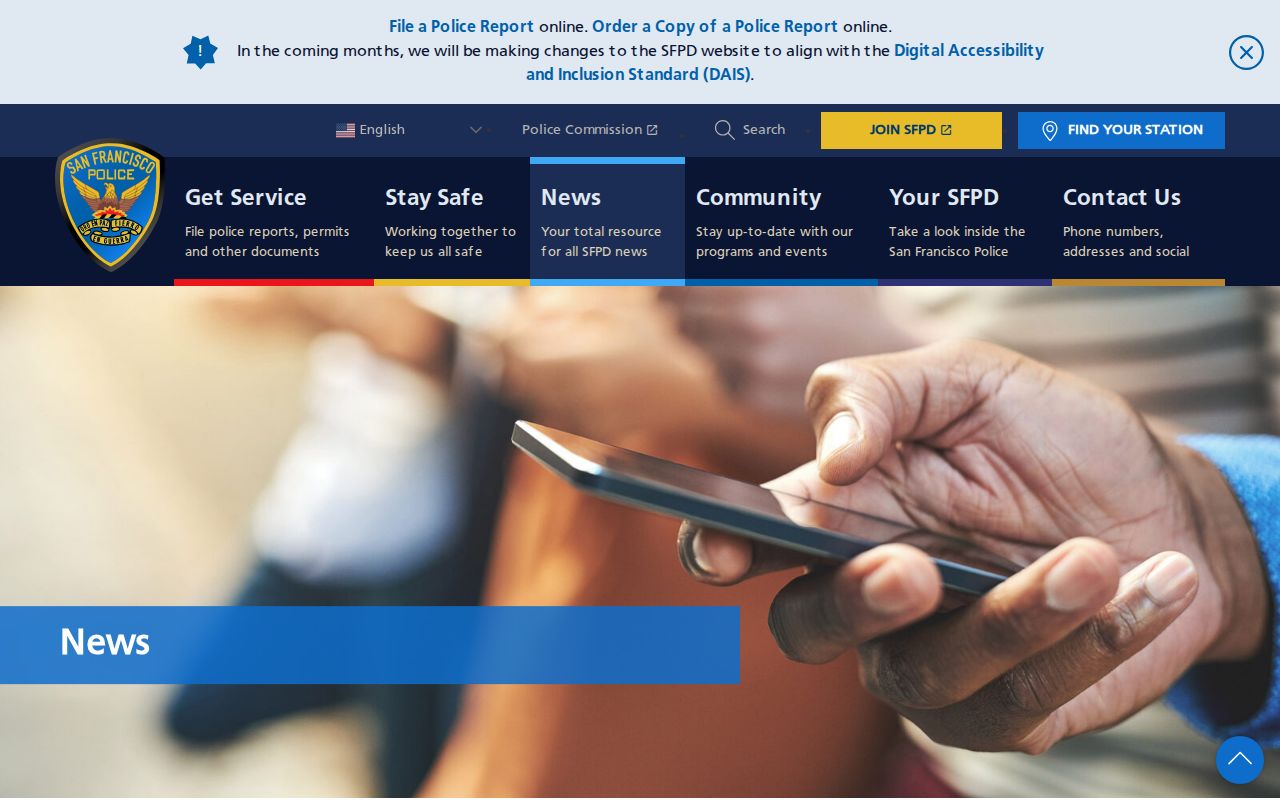
The story-based layout works well for case research. Still, a missing name proves nothing about whether a San Francisco arrest happened. Silence is not a record.
San Francisco Mugshot News Outlets
The county's media field is broad. Every newsroom picks its own cases and its own images. Scene shots, surveillance footage, evidence photos, and agency-supplied pictures show up only when they serve the story. No outlet runs a complete mugshot gallery. The table below opens with the official police channel, then moves to the local news sources worth knowing.
| Outlet | Coverage | Photos? | Where |
|---|---|---|---|
| SFPD News | Selective citywide arrest and investigation releases | Case-specific, not routinely booking photos | Official agency news page |
| Mission Local | Mission District and some citywide crime reporting | Story, scene, and file images vary | Trouble desk |
| San Francisco Standard | Frequent citywide crime and public-safety stories | Case-specific editorial images | Crime and public-safety desks |
| San Francisco Chronicle | Daily selective metro reporting, including the Tenderloin | No standing booking-photo roll | Bay Area desk |
| SFGATE | Frequent Bay Area crime items | Agency, scene, and file images | Bay Area news |
| San Francisco Examiner | Selective local news and public safety | Varies by report | Local news desk |
| KTVU, ABC7, NBC Bay Area, KRON4, CBS Bay Area | Event-driven broadcast reporting | Selective scene, surveillance, or supplied images | Each station's San Francisco or crime desk |
Broadcast is a good starting point. Try KTVU Crime & Public Safety, ABC7 San Francisco, NBC Bay Area Local, KRON4 San Francisco, and CBS Bay Area Crime. Their reporting leans on police, prosecutors, and courts. Coverage runs on events. A quiet station tells you nothing about custody. For a visual example of the format, the San Francisco Standard crime desk shows how broad and selective local crime coverage can be.
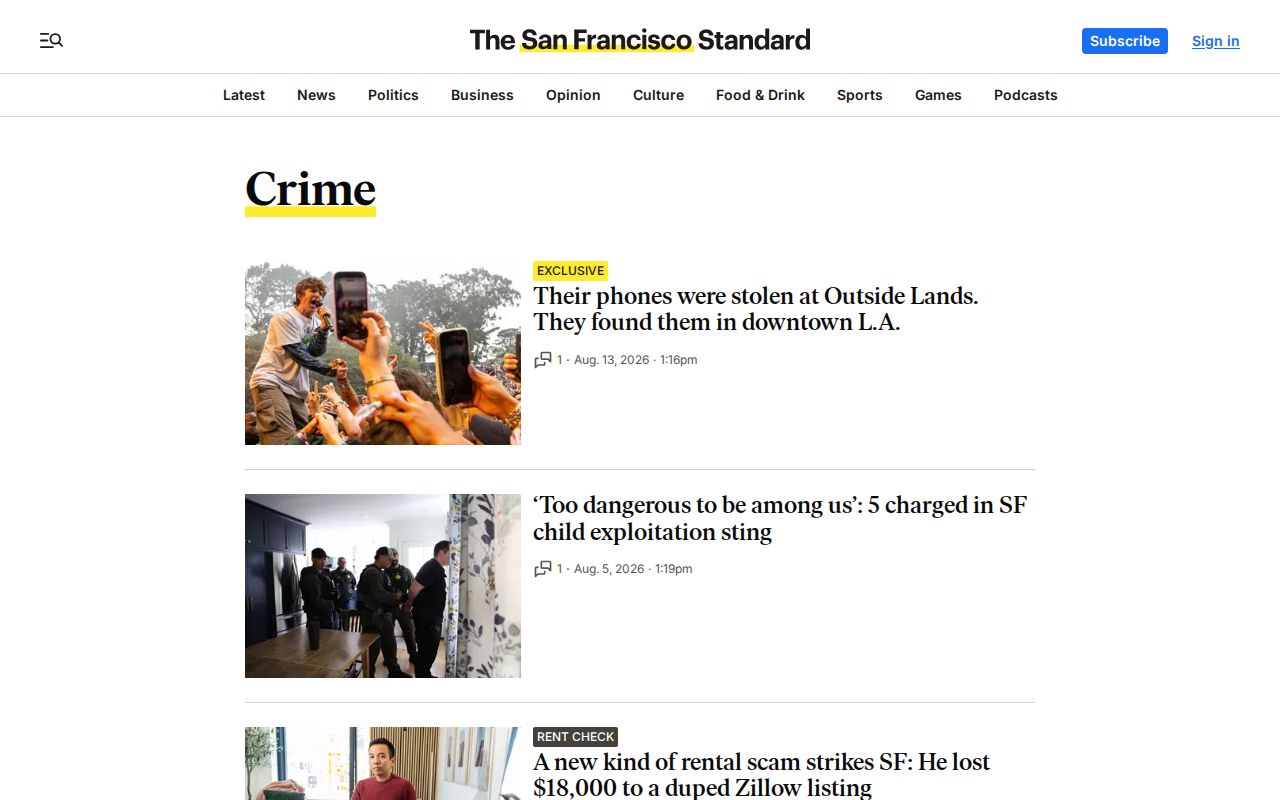
That desk blends original reporting with agency and court material. Trace any article back to its named official source before relying on it.
San Francisco Incident News Timing
Mission Local offers something no one else does. Its 16th and Mission dashboard refreshes around noon with SFPD incident reports that arrive roughly a day late. Historical context stretches back to 2018. It is great for studying what was reported near one intersection. It is not a list of people booked into San Francisco County Jail. Keep the limits in mind. An incident record can shift as police review the event. It may describe a reported offense without naming anyone arrested. A custodial arrest elsewhere in the city may never surface there at all. The Mission Local Trouble desk layers on reported stories built from interviews, police releases, court material, and jail records. Both products are journalism. Neither one works as the Sheriff's current-custody system or a final court history. Note: A one-day reporting lag tells you nothing about the Sheriff's unknown refresh interval for current custody.
San Francisco Booking Photo Requests
Booking photos do not flow automatically into San Francisco County crime news. County Jail #1 takes an identification photograph during intake. The Sheriff's public locator is text only, though. SFPD might release a case-specific image in a news post. Reporters can request records directly from agencies. California law opens the door to certain arrest facts, yet it does not make every booking image public. Safety concerns, open investigations, privacy rules, juvenile protections, sealing, and other lawful limits all allow withholding or redaction. Want SFPD photographs, evidence, statements, video, or arrest-log data? Use the SFPD public-records portal. A routine incident-report copy goes through a separate free request route. One wrinkle matters: since the Sheriff performs booking, a specific intake photograph may sit with the Sheriff's Office instead. Include the name, the date, an incident or booking identifier, and the exact record you want. No agency promises to hand over every image.
San Francisco Unofficial Arrest Indexes
Two third-party sites offer anything close to a real San Francisco-local arrest page. Mugshots.com San Francisco City/County looks historical. Its arrest coverage stops around 2011. The Local Crime News city index is livelier. It promises daily updates and posts names, ages, cities, arresting agencies, and code sections. No mugshot field stands out on the page. Neither site is official, so treat both with care. Entries can arrive late, repeat, sit incomplete, or linger online after a person's status has changed. Confirm anything through the Sheriff and the Superior Court before acting on it. Recently Booked, Busted Newspaper, Arrests.org, and Mugshots.zone have no verified San Francisco-local section. Their statewide pages do not count as county coverage.
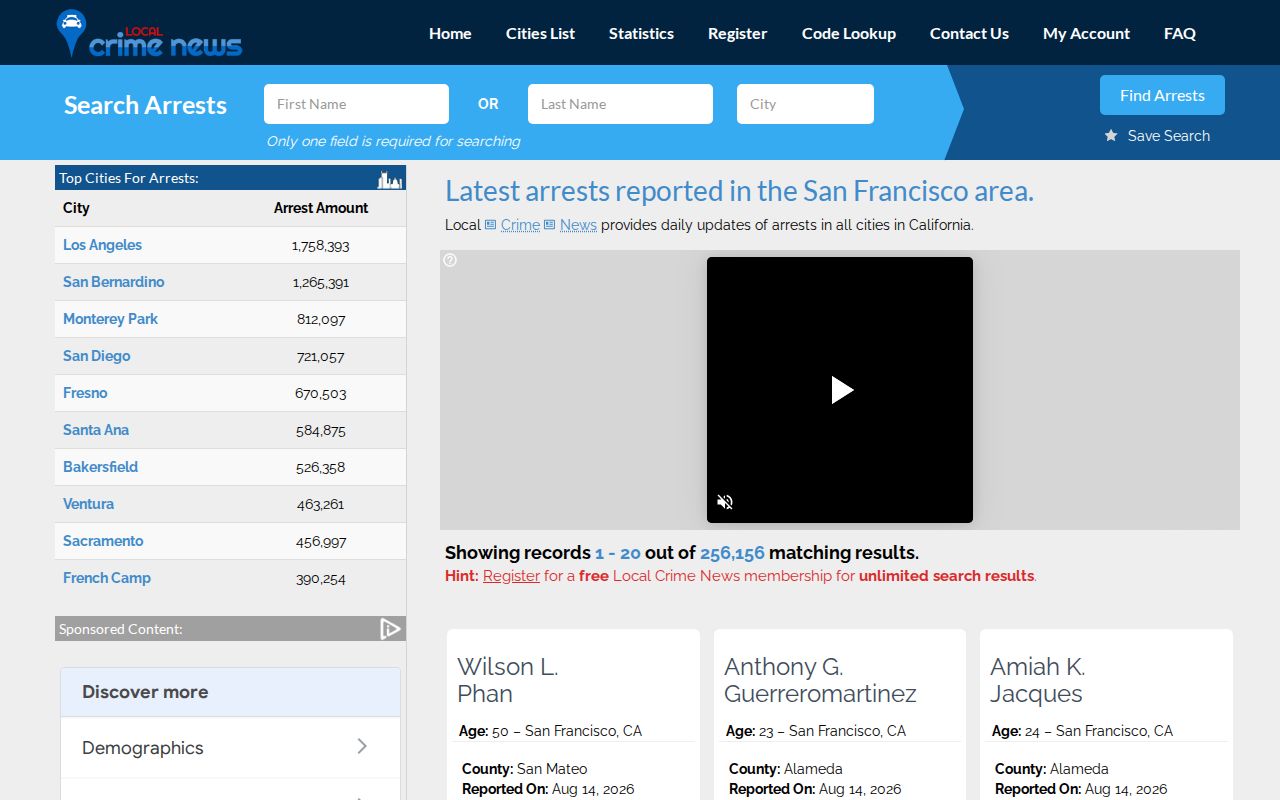
A commercial index like this is a starting point. Verify each entry against the Sheriff's custody listing or the Superior Court docket before trusting it.
Trace San Francisco Arrest Stories
A news story is a lead, not a record. Pull the identifiers from the article and note the publishing date. Then work through official sources in custody order. The county roster shows a person only while held. The agency file preserves the arrest itself. The court docket tracks what happens next. The county-wide booking and roster treatment walks through those boundaries in depth.
- Read the story closely. Note the full name, arrest date, arresting agency, incident number, booking number, and quoted charge.
- Check the Sheriff's Find a Person in Jail tool if the person may still be held. No result can also mean release or citation.
- Request the identified SFPD report or Sheriff booking record. Ask for the precise photo only if it is relevant and expect a disclosure review.
- Use the San Francisco Superior Court criminal case tools. Match the booking or action details to a court number instead of relying on name alone.
- Read the newest docket entry for the disposition, meaning the court's outcome, and account for later dismissal, sealing, or appeal.
The Superior Court Criminal Division ties together the case portal, calendars, record access, and clerk contacts. Its remote search needs a case number or an attorney name. Broad defendant-name searches are not supported. No case number? The cumulative criminal index or a clerk can bridge that gap. Filings can show arraignment, pleas, diversion, dismissal, trial results, and sentencing, details a first-day news story simply cannot know.
Timing shapes the whole chain. The Sheriff's locator lists only people still in custody, with no fixed update schedule. San Francisco's quick pretrial review can free someone before a reader opens the story. Same-day official figures are aggregate counts only. Names, charges, agencies, booking numbers, and photos are all absent. DataSF posts monthly booking totals, but those records are grouped to prevent identification. They cannot tie a news name to a booking. For a person-level daily log that is not posted, a focused Sheriff records request naming the date and fields is the route.
Remote dockets also differ from court documents. The portal shows chronology, case history, status, and upcoming events once you hold the case number. Underlying criminal documents stay restricted. For local viewing and copies, Criminal Records at the Hall of Justice handles it. A case number from a news release beats a loose name match every time. Keep it close, too, because charge wording can shift between police booking language and what the prosecutor files.