
San Francisco County Busted Mugshots
An arrest and a jail booking are not the same thing here. Police make the arrest. Many minor cases end with a citation and release. No jail entry follows. Custodial arrests are different. They go to County Jail #1, the Intake and Release Center, where the Sheriff's Office takes over. Deputies there fingerprint the person, check for warrants and holds, log property, and run a health screen. They also snap the booking photo people call a mugshot.
Don't expect a browsable county mugshot gallery, though. Booking photos stay inside law-enforcement systems. The public custody locator is text only. It shows who is currently held and the charge listed at intake. For the real outcome, turn to the San Francisco Superior Court record, which tells you more than that first booking entry ever will.
San Francisco County Booking Fields
No single public screen puts every booking field together with a photo. The information lives in three places instead. Those are the Sheriff's custody locator, the arresting agency's files, and the court docket. Two numbers matter most. The SFNO, or SF number, tracks a person across the whole jail system. A booking number marks one intake event. Together they keep people with similar names separate and let you tie a jail entry to a precise records request.
| Field | What it shows |
|---|---|
| Name and age | Identity data as held and releasable, subject to correction and redaction. |
| SFNO and booking number | The jail person identifier and the number for the specific booking event. |
| Booking and location | Intake date, current facility, custody state, and any scheduled release data shown. |
| Charges and holds | Statute, charge description, warrants or holds, bond, and charge-level status at intake. |
| Court bridge | Next court date, department, docket or action number used to follow the case. |
| Intake materials | Booking card, field-arrest card, fingerprints, identification photo, and property record. |
Some parts of a booking record stay closed by default. Health and mental-health details, victim or witness data, juvenile files, sealed matters, and anything that could hurt an investigation may be withheld or blacked out. One more caution applies. A charge status on the roster is not the court's judgment. So match the booking or action number to the actual court case before treating any status as final.
Note: A charge field records what was booked, while the court docket records what prosecutors filed and how the matter ended.
When San Francisco Bookings Appear
A San Francisco County booking record begins the moment a custodial arrest reaches County Jail #1. Intake covers a lot of ground. There is medical screening, fingerprints, and the booking photograph. Warrant checks, classification, and property logging happen too, along with a release review. Someone cited at a station or let go before jail acceptance never enters this system at all. That person's paper trail sits with the police instead.
Keep the sequence in mind. Booking staff compare the arrest and booking cards, process each charge, and weigh release eligibility. That is why a police incident can exist without a jail entry. It is also why a booking photo can sit in a file the public never sees. The roster is just one slice of a fuller San Francisco County arrest record.
- Booking
- Formal intake after arrest, including identifiers, charge data, fingerprints, and an identification photograph.
- Bond
- Money or conditions tied to release while a case is pending.
- Arraignment
- The court hearing where filed charges are stated and rights are addressed.
- Disposition
- The case outcome, such as dismissal, plea, acquittal, or sentence.
Why Busted Records Vanish Quickly
Bookings can vanish from view fast here. The Sheriff's own timeline says the San Francisco Pretrial Diversion Project delivers a risk assessment and release recommendation within eight hours of booking. A judicial officer then rules, usually within 18 hours, with a 12-hour extension possible in certain cases. Own recognizance simply means release on a promise to return to court instead of posting money bail.
That speed has a downside for families checking the locator. The listing may disappear before anyone looks. The intake file survives, though. Once release happens, pull the booking number, file a Sheriff records request, and follow the action number into the court system. A name staying on the roster only means custody, nothing more.
Note: A fast release can shorten locator visibility while the booking, agency, and court records continue through their normal channels.
Request San Francisco Booking Photos
There is no bulk photo search in San Francisco. The official route is a focused public-records request. The Sheriff takes the jail intake photo, while SFPD may hold arrest photographs of its own. Give the agency enough to find one event. That means a full name, a rough arrest or booking date, the SFNO or booking number if you have it, the arresting agency, and the exact record you want. Ask specifically for the front-view booking photo or booking sheet. Request electronic delivery, and ask for advance notice of any fee.
- Check the current Sheriff locator and save the booking number, SFNO, arrest date, and court data shown.
- Submit a narrow request through the Sheriff public-records page for the jail booking sheet or identified photo.
- If SFPD made the arrest, also use its public-records portal for photographs, evidence, statements, or arrest-log material.
- Ask for nonexempt portions if part of a record is withheld, and request the legal basis for each redaction or denial.
California's Public Records Act sets a simple clock. An agency gets ten calendar days to decide whether it holds records it can release. Unusual circumstances can add fourteen more days, but the agency must say so in writing. Note: the deadline is for a decision, not for delivery. The Sheriff posts no fixed photo fee or turnaround, so ask for an estimate before you commit. Keep SFPD incident reports out of it. Those run through a separate free channel and get tangled when mixed with a photo request.
Incident-related photographs and records have their own official route. That is the SFPD GovQA request interface.
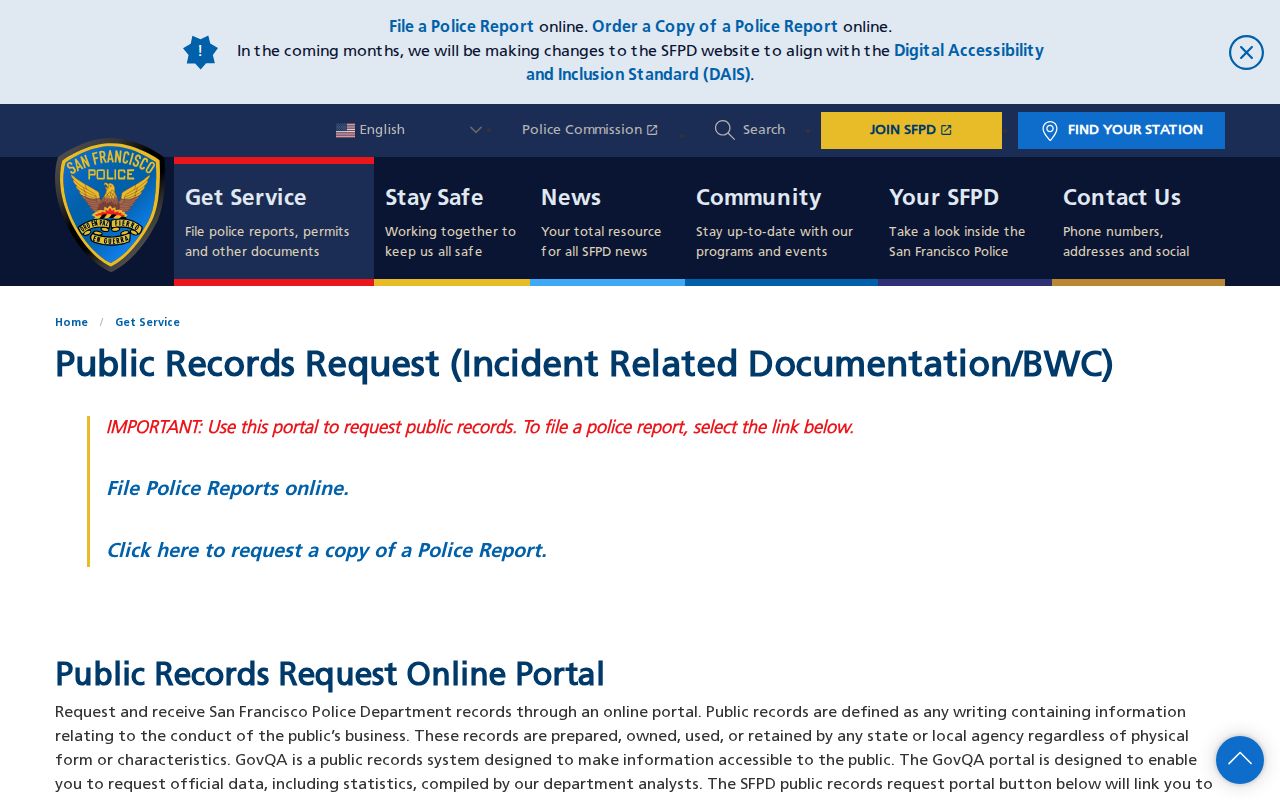
Note: this portal is a targeted access channel rather than a public gallery, and every item released through it stays subject to lawful redaction.
Why Busted Photos Stay Hidden
Booking in San Francisco County does include a photo. You just will not see it on the public custody locator, which shows only generic icons. The county makes that choice on purpose. An older interagency inventory floated releasing "Mug Shots" with the criminal-history tracking number stripped out, but today you still need a focused agency request, the facts of the case, and a review of exemptions before anything comes loose. A photo taken is not a photo displayed.
State law splits the difference here. Basic arrest facts are public, yet an agency can hold back material when release might endanger a person, hurt an open investigation, expose protected criminal-history data, or run against privacy law. So ask narrowly. Request one identified record, and let the agency sort out what it can hand over. Demanding a full day of faces is the one approach guaranteed to fail.
California Busted Mugshot Law
The California Public Records Act, starting around Government Code section 7920.000, sets the rules. Section 7923.610 lists what generally must be disclosed: who was arrested, a physical description, the time and place of arrest and booking, the circumstances, bail, how the person was released, where they are held, and the charges booked. The photograph is a different animal. It is not automatically public in every case. Penal Code section 7 defines booking to include recording an arrest and capturing fingerprints or photographs. Then there is California Civil Code section 1798.91.1, which goes after publishers who charge to remove, fix, or stop showing an arrest booking photo. Think of it as an anti-pay-to-remove rule. It does not block official release or news coverage. Penal Code section 13665 is narrower still, covering law-enforcement social media posts and generally requiring removal within 14 days unless an exception applies. That clock has no power over agency websites, court files, or private publishers.
Start any correction with the agency that created the record. For a court route, turn to California Courts record-cleaning information along with the San Francisco Superior Court process. Sealing, automatic relief, juvenile sealing, and dismissal each carry their own standards, and a dismissal does not destroy everything. Unofficial pages come last, only after the official record is fixed or sealed. Mugshots.com offers a no-fee maintenance policy for certain sealing, restriction, identity, and record-status grounds, though it wants official proof plus its page identifier. Recently Booked has no verified San Francisco section. For several other large publishers, no clear free San Francisco route exists. Never pay a middleman. Nobody can promise total erasure. A search engine may refresh an outdated copy once the source page changes, but that never seals the record itself.
Note: the binding text behind the no-payment safeguard sits in the California commercial mugshot provisions.
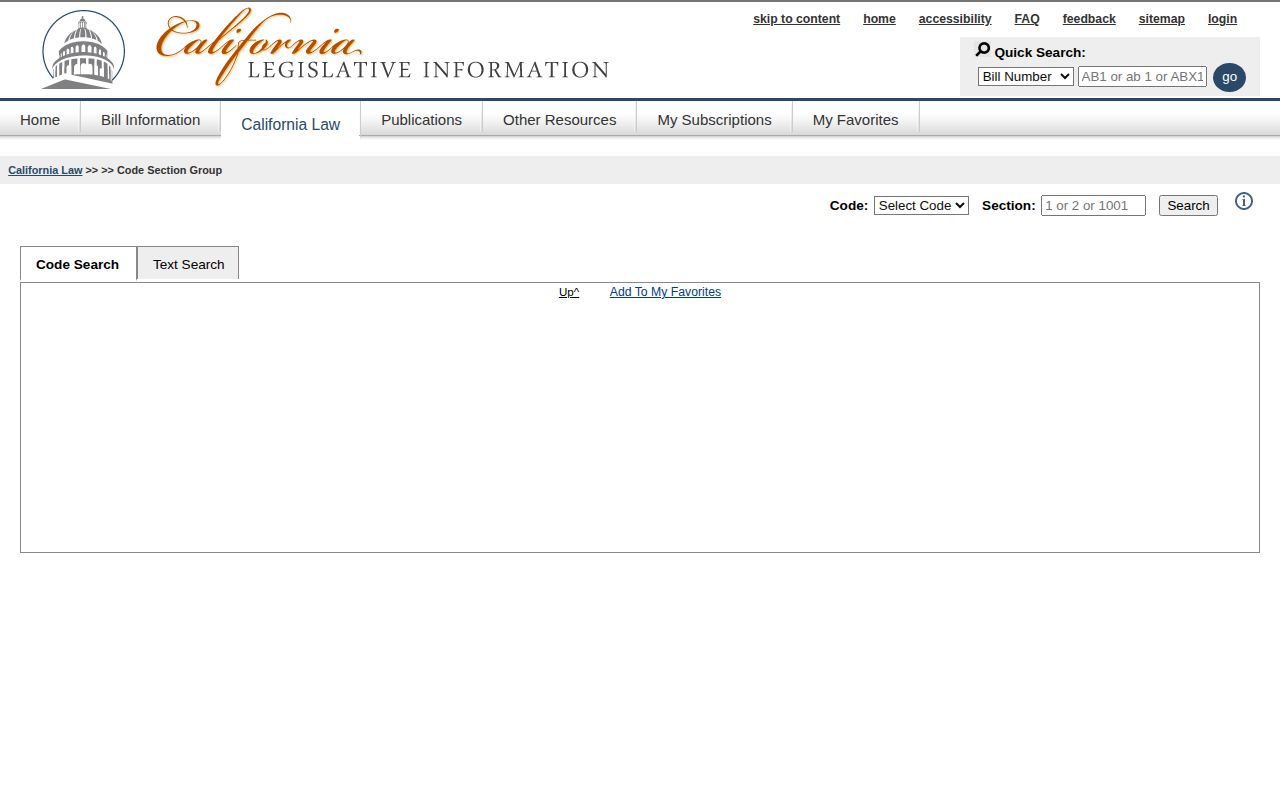
The code separates lawful record access from commercial pressure around a booking image, so treat any promise of guaranteed paid removal with real suspicion.
Note: Correct the source record first; a search engine can refresh a stale result but cannot alter an agency or court file.
Protected San Francisco Arrest Records
Not everything ends up in a public search. Juvenile delinquency files stay confidential, so they never serve as an adult mugshot source. Sealed cases, victim and witness names, medical details, rap-sheet tracking numbers, and material tied to safety or open investigations can all be withheld or redacted. Sometimes a blank result simply means the law is doing its job. Often the cause is more ordinary, though: the person was cited and released, transferred elsewhere, or the name was misspelled.
Resist the urge to fill gaps with social media guesses. Each record system has its own scope and its own legal limits. Search with exact identifiers first, then try reasonable name variants, then call the office that holds the record. Time alone never makes a sealed file public. A court order can open access, but even then an agency may keep internal copies.
Note: Absence from the live locator proves only that the person is not currently shown in San Francisco Sheriff custody.
Find San Francisco Busted Mugshots
Start any San Francisco County lookup with custody status. Who holds the person right now? The Sheriff locator answers that question for people currently in custody. It misses plenty, though: arrests made earlier today, people already released, cited cases, and anyone moved into state or federal hands. Collect solid identifiers at every step. Then take them to whichever system owns the next piece of the record.
- For possible county custody now, search the Sheriff locator by name, exact SFNO, or exact booking number.
- For a recent release, request the named booking log, booking sheet, or photo from the Sheriff and SFPD as applicable.
- For an incident without a jail entry, check official incident data and request the police report.
- For what happened after booking, match the action or case number to the Superior Court docket.
- For a sentenced state prisoner, search CDCR CIRIS; for federal or immigration custody, use the matching federal locator.
Official news releases name only selected arrests, so treat them as samples rather than a feed. Sheriff social media posts are selective too, and no official jail app with booking photos checks out. One tool worth knowing is VINE California, which sends custody-status notices for participating records. It shines at release alerts. It is not a photo archive, and its answers should be checked against the Sheriff.
San Francisco County Busted Roster
For current custody, the Find a Person in Jail locator is the official San Francisco County busted roster. Type at least the first three letters of both names, or search by an exact SFNO or booking number. Those two numbers do different work. The SFNO tracks a person across all Sheriff contacts, while the booking number covers one custody event only. Note the spelling variants you find, and never assume that matching names mean the same person.
| Search or result field | Use and limit |
|---|---|
| First and last name | At least three letters of each; spelling and identity still require care. |
| SFNO | Exact durable jail-system person identifier. |
| Booking number | Exact identifier for the specific booking event. |
| Custody and facility | Current operational status and location, with no fixed refresh promise. |
| Charge and bond | Booked statute, description, hold or bond data. |
| Court information | Next date, department, and docket details that can bridge to the court. |
What does the locator actually tell you? Plenty, in some cases. Age shows up, along with the booking date and a total bond figure. Charge-level status appears too, plus attempt flags and a scheduled release date where one applies. Blank fields are normal here. Some records simply lack certain details. One thing you will not find is a booking photo. There is no public mugshot field in this system, and no fixed refresh schedule is published either. Treat the data as a live operational snapshot rather than guaranteed real-time output. Entries stick around only while a person sits in custody; once released, they vanish, with no stated grace period afterward.
Note: Check urgent custody facts through the Sheriff because release, transfer, or court action can change the roster before a web search updates.
San Francisco Busted Booking Feeds
Don't expect a live roster of names here. San Francisco publishes no public booking feed listing who was arrested on a given day, week, or 72-hour window. What the Sheriff's Office does post on its home page is a set of date-stamped totals: bookings, releases, and the current jail population. Think of it as a pulse check. You learn how busy the jails were. You learn nothing about the people behind the numbers. No names, no charges, no booking numbers, no arresting agencies, no photos. The inmate locator doesn't close the gap either. It needs a name or identifier to start, and it drops anyone already released. The captured Sheriff same-day aggregate view shows the full extent of what the official daily channel offers.
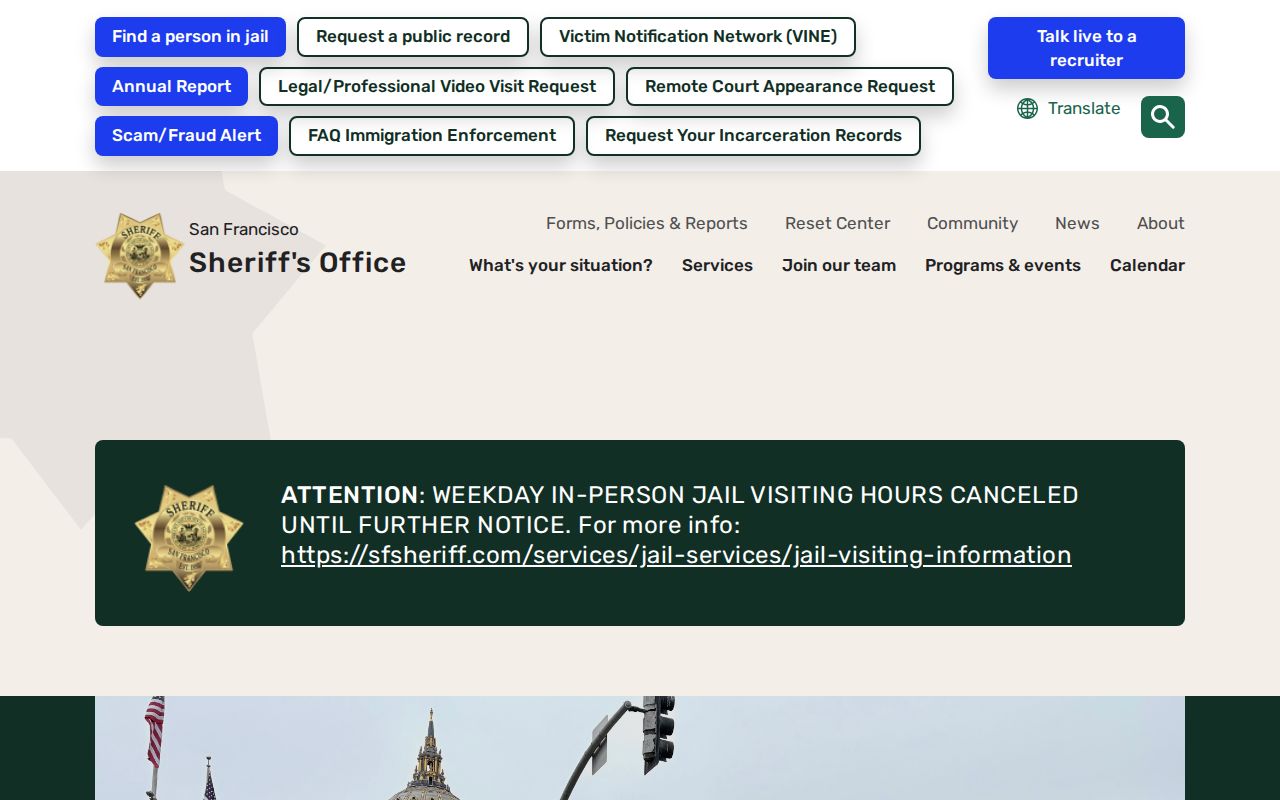
So the counts tell you activity happened. They don't tell you who got busted in San Francisco County. Local reporting suggests daily logs have been emailed on request, which means a named record may exist even with no webpage showing it. Anyone filing a public-records request should spell out the date range, the fields wanted, and the electronic format. For context on specific incidents, SFPD News is the place to look. One caution: unofficial indexes should never be passed off as the county arrest log.
Note: No unofficial index fills San Francisco's missing public named-person booking-feed window or becomes an authoritative county arrest log.
San Francisco County Booking Trends
Numbers from the 2024 Sheriff Annual Report give the scale of jail traffic: 12,186 booking events and 12,397 release events. Notice the word "events." These are not counts of people. One person can be booked more than once, or rebooked for administrative reasons. So the totals inflate if you read them as unique arrestees. That same wrinkle makes it risky to stack these figures against police incident data and call the comparison meaningful.
For the long view, the DataSF Sheriff Jail Bookings dataset tracks monthly booking counts all the way back to 2012. Each row records the booking month and year, a demographic group and subgroup, the booking count, a data-as-of date, and a load time. Thin categories get lumped together so no individual can be picked out. That privacy choice has a cost, though. The dataset holds no names, photos, charges, agencies, bond amounts, release records, or live custody status.
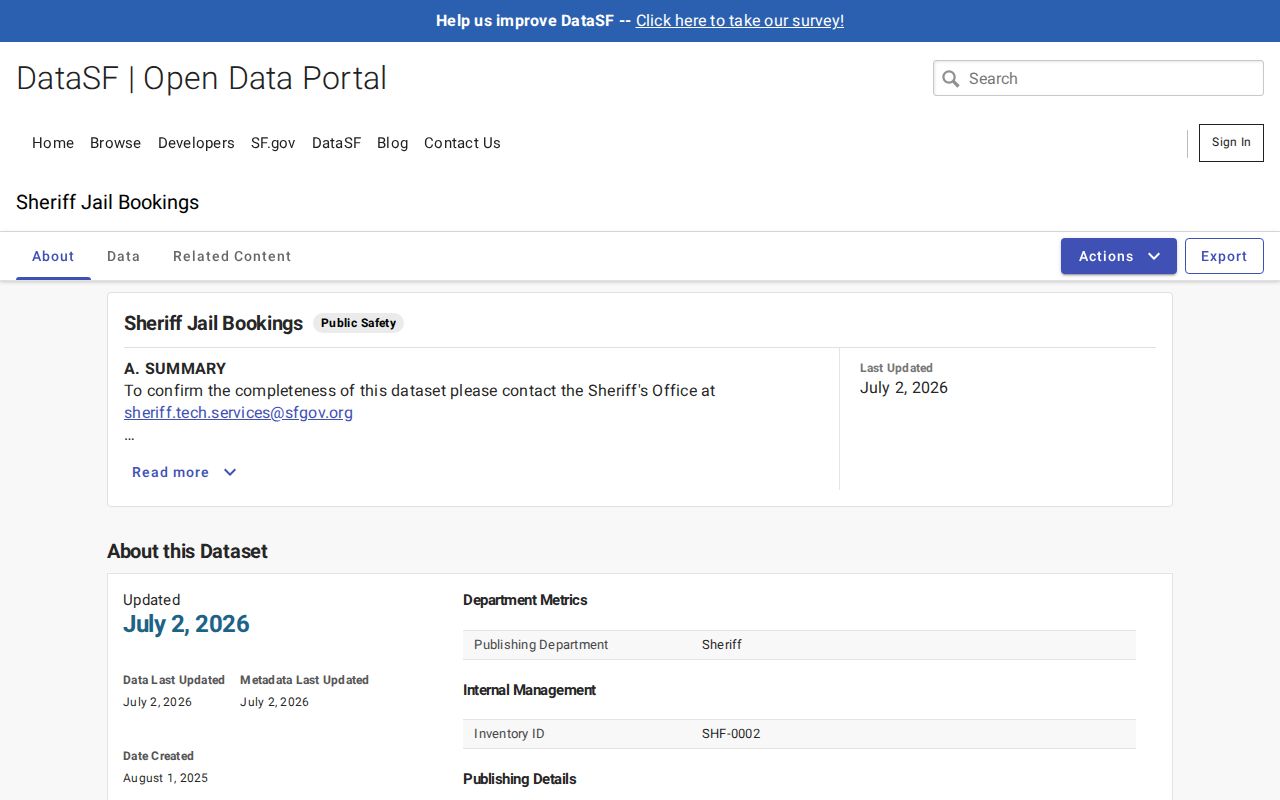
In short, the monthly archive answers trend questions, while pinning down a specific old booking still takes an agency request plus a court search.
Busted Then Released in San Francisco
Release changes where a record lives. While someone is held, they may show up in the live roster. The moment they walk out, that entry disappears. Yet the agency's booking record and any court case survive the roster change untouched. A sentence to state prison moves the person into the CDCR system. Federal or immigration custody each run on their own locators. The source map below flags where a photo might exist and why official channels should come first.
| Custody or record state | Channel | Photo and authority |
|---|---|---|
| Held in county jail | Sheriff current-custody locator | Official; no public photo field |
| Released from county jail | Sheriff or SFPD record request | Official; targeted photo request subject to review |
| Selected police case | SFPD News | Official but selective; image type varies |
| Filed criminal case | Superior Court record | Official disposition source; not a photo feed |
| Sentenced to state prison | CDCR CIRIS | Official; separate CDCR photo policy |
| Federal or ICE custody | Federal locator | Official; no county booking photo |
| Historical private listing | Mugshots.com or Local Crime News | Unofficial; possibly stale, incomplete, or wrong |
San Francisco's pretrial process moves fast, which makes this a real issue rather than a technicality. Someone can be assessed, reviewed, and released within hours. Meanwhile the booking sheet sits in agency files. So a missing live entry should push you toward a court and records check, not toward assuming nothing ever happened.
San Francisco Arrest Court Outcomes
A booking sheet is only the opening chapter. The San Francisco Superior Court takes over from there, recording filing decisions, arraignment, pleas, hearings, diversion, dismissal, trial, sentencing, and later sealing. Search by case number whenever you can, because names collide constantly. Matching the booking number or action number to the court file keeps you honest about what stage a case is actually at. The Superior Court criminal division links the case-information tools. Its portal allows free search by case number or attorney name and shows chronological entries, status, and upcoming events. It is not a broad defendant-name arrest search. With only a name, you may need the cumulative criminal index or a clerk's help to find the right case number.
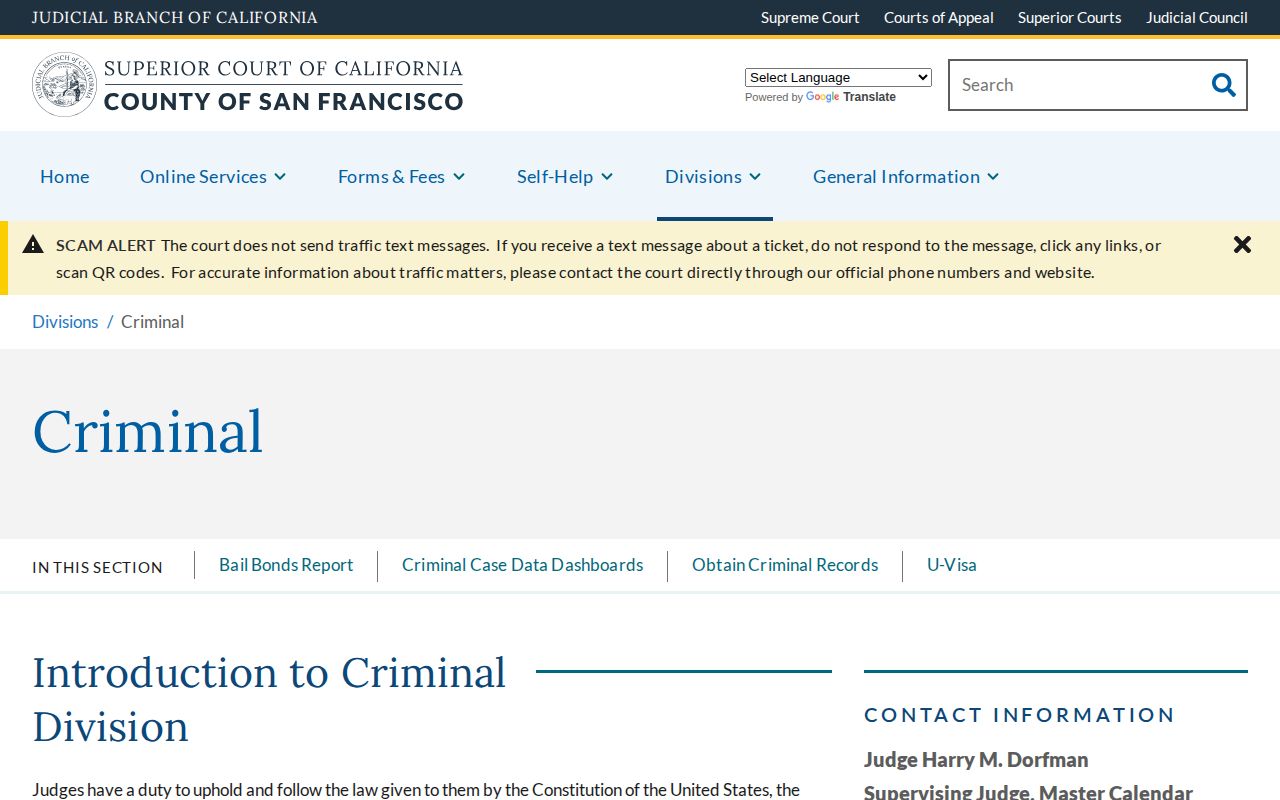
The court file is where the story ends, so check it before repeating anything a roster or news release says.
San Francisco Prison Record Search
CDCR's CIRIS system covers people in California state-prison custody. Only that. It won't find every San Francisco arrestee, people held pretrial in county jail, cited-and-released cases, or everyone discharged. Search by CDCR number if you have it. A name works too. Results may include age, the CDCR number, current location, admission date, county of commitment, parole eligibility, and any parole-board action. The CIRIS sentenced-prisoner interface is the official state-custody lookup.
One photo wrinkle worth knowing: a CDCR identification image comes from a state-prison record and may look different from the San Francisco jail photo. CDCR handles identification-photo requests under its own policy. Federal custody runs on a separate track entirely. The BOP locator searches by register number or by name and demographic fields, though it shows no public photo. The ICE detainee locator covers immigration detention and is likewise not a criminal archive. Each system answers one custody question. When a person can't be found online, a narrow request to the agency that made or held the record is the fallback.
Old San Francisco Busted Archives
A booking record can vanish from the live locator. That doesn't mean it was destroyed. The Sheriff has never posted a fixed retention term for an individual booking photo, so old material can sit in storage, transfer elsewhere, or be gone under a named schedule. To find out, send Central Records and Warrants the person's name, the SFNO or booking number, a narrow date, and the exact record you want. If SFPD made the arrest, file a separate request with that department. The Superior Court docket is worth a search too.
DataSF tracks trends, not people. For older holdings, the City's retention-schedule dataset helps you spot adopted record series. The San Francisco Public Library History Center confirms that historical SFPD material includes mug books, though those collections are not recent booking data and may carry access restrictions. State Archives county-record pages describe broader historical holdings. They won't confirm that any particular San Francisco mugshot series moved there.
Archive requests reward precision. Name the agency, the approximate year, the series title, and any identifier you hold. Ask about access limits and reproduction rights up front. Old state-prison identification albums differ from county arrest photos, so be sure which one you're chasing.
Note: Local retention schedules control San Francisco records; statewide guideline benchmarks are not a substitute for an adopted Sheriff schedule.
Where San Francisco Arrests Go
San Francisco's city-county layout breeds two record mistakes. County Jail #3 sits in San Bruno, at the Sheriff complex outside the county line. Yet it is still a San Francisco Sheriff's jail. The street address does not put a person there in San Mateo County custody. Jail #1 handles intake and release. Anyone held longer may land in Jail #2 or Jail #3.
The airport flips that problem around. SFO is city-owned but sits geographically in San Mateo County, and SFPD data materials fold airport arrests into San Mateo County figures. A San Francisco-branded location can therefore point away from the county's own booking stream. Skip the place name. Check three things instead: the arresting agency, the physical jurisdiction, and the receiving jail.
Note: Jail #3 remains in the San Francisco system, while SFO airport arrest data follows the airport's San Mateo County geography.
Unofficial San Francisco Mugshot Sources
Work through official records before touching any commercial or news page. SFPD News posts selected arrest and investigation releases. Local outlets cover case-specific stories. Both may run scene photos, evidence shots, surveillance stills, or supplied images, and none of that adds up to a complete booking gallery. The Crime News & Mugshots coverage here keeps those editorial reports separate from the county roster and court docket.
Of the big aggregators, only one has a verified San Francisco-local section. The Mugshots.com San Francisco City/County page skews historical, with an arrest-year facet that stops at 2011, so treat it as an archive rather than a current custody feed. Local Crime News runs a city-local arrest index that claims daily updates, though its entries show no obvious mugshot field. Both are unofficial. They can be stale, duplicated, incomplete, or simply wrong, so confirm anything against the agency and the court docket before acting on it.
Recently Booked has no San Francisco county section. Busted Newspaper offers no verified local category, and neither Arrests.org nor Mugshots.zone has a confirmed San Francisco landing page. A guessed URL proves nothing about coverage. Free correction policies only help where a real record exists, and no private page substitutes for a court order or an agency correction.
San Francisco Busted Mugshots City
San Francisco is California's only consolidated city and county. That means one incorporated city fills the entire city map. The Mission, the Tenderloin, and the Bayview are neighborhoods, not separate cities. Oakland sits in Alameda County. Daly City sits in San Mateo County. Building extra city records for those places would steer readers toward the wrong police and booking systems.
The San Francisco Busted Mugshots city page traces SFPD arrests into County Jail #1, explains why no complete SFPD blotter exists, and lays out the city police request route. It also separates cited releases from custodial bookings. City arrests that pass into Sheriff custody run through the same roster, records-request, court, and archive channels described here.
Get San Francisco County Booking Records In Person
The San Francisco Sheriff's Office
1 Dr. Carlton B. Goodlett PlaceSan Francisco, CA 94102
415-554-7225